Week 3 – Balancing PLN, Media Literacy & Public Discourse
Get To Know Global News: Sophie Lui (2024)
This week, online podcast guest, Global News journalist, Sophie Lui, meets EDCI 338 Professor Jesse Miller to discuss journalism, networking and social media. Above is an introduction to get to know who Sophie Lui is before reading onward about what I learned from her conversation with Jesse Miller.
How do notable individuals use social media? What are the benefits of being in the public eye and having a PLN?
People in the public eye surely have different ways of using social media. Some of my favourite artists, actors, creators or writers each have their own distinct language and usage of social media. Some to promote, others to express and many to unwind and let their personality be free. Professionals are examined in every spotlight they are in, and online based media opens this world of criticism in ways unimaginable.
Listening to Sophie Lui made me notice the role of social media for people in the public eye as a tool for networking, learning, and connecting with others. Sophie explained that although Twitter can sometimes be negative, she continues to use it because it introduces her to journalists, writers, and commentators she may never have discovered otherwise. She shared that Twitter has allowed her to “continue to learn” and has opened a wider world that wasn’t as easily accessible earlier in her career.
One point that really stood out to me was how Sophie described building her career before social media existed. Instead of sending emails or direct messages, she would cold-call people, ask them to meet for coffee, send demo tapes, and build relationships with experienced journalists who could mentor her. Today, social media allows professionals to build many of those same relationships much more easily through a Personal Learning Network (PLN) and sometimes only virtually.
Building community with online tools provided by the employer can be limiting; what are the perceived restrictions and benefits?
Many organizations provide internal communication platforms where employees can collaborate with one another. These tools are beneficial because they create a safe, professional environment where information can be shared while following workplace expectations and privacy policies. Some of these tools I’ve used myself including Microsoft Teams, Google Classroom, Canvas, Brightspace etc.
However, I think these tools can also be limiting because they keep conversations within a single organization. If teachers only communicate with colleagues in their own school district, they may miss opportunities to learn from educators in other provinces or countries who have different experiences and ideas.
Sophie Lui’s career shows how valuable it is to build relationships outside of your immediate workplace. Early in her career she intentionally sought advice from experienced journalists, including people she admired in other news organizations, because she knew learning from different professionals would help her grow. Today, social media makes those connections even easier.
The Digital Literacy chapter also emphasizes that today’s learners have access to unprecedented amounts of information and communication technologies, but they need the skills to use these tools effectively and responsibly. I think the best approach is balancing both employer tools and a broader PLN. Internal platforms help build relationships with colleagues, while a public PLN expands learning beyond the workplace.
Delivering information in a connected society requires verifiable resources; how do you build a PLN to rely on?
One of the biggest lessons I took away from both resources is that credibility matters. With so much information available online, it is important to know which sources can be trusted.
In Trilling and Fadel’s Chapter 4 of 21st: Century Skills: Learning for Life in our Times, Digital Literacy Skills, it is explained that information literacy means being able to “access information efficiently,” “evaluate information critically,” and “use information accurately and creatively.” It also stresses the importance of assessing the credibility of online information by using corroborating evidence from multiple reliable sources (Trilling & Fadel 2009).
Sophie Lui reinforced this idea through the way she described using Twitter. Rather than following everyone, she intentionally follows writers, journalists, and commentators whose work she values because they continually introduce her to thoughtful articles and new perspectives. Even though she admitted Twitter can sometimes be exhausting, she believes the opportunity to learn outweighs the negatives.
I want to build a PLN that includes experienced teachers, educational researchers, Indigenous educators, professional organizations, and reputable news outlets. I also want to be intentional about checking multiple sources before sharing information. This assignment reminded me that a strong PLN is not measured by the number of people you follow, but by the quality and credibility of the people who make up your network.
How do those who are veteran storytellers minimize risk in sharing misinformation?
Experienced journalists know that public trust depends on accuracy. Once misinformation is shared, it can spread quickly and damage credibility. The Digital Literacy chapter explains that information literacy requires people to evaluate information critically, understand ethical issues on information use, and rely on multiple reliable sources before sharing information. These skills help professionals minimize the risk of spreading misinformation (Trilling & Fadel 2009).
Sophie Lui also demonstrated another important strategy: slowing down before responding publicly. She admitted that there have been many times when she started writing a tweet but decided not to post it. Instead, taking a moment to breathe and think before reacting. I think this is such an important habit, especially today when people often feel pressure to respond immediately. I think this is a lesson I can apply in my own professional life. Whether responding to parents, students, or public discussions online, taking time to verify information and reflect before posting is much more responsible than reacting impulsively.
What is media literacy? Why is it important? Why is it dismissed?
Trilling & Fadel (2009) defines media literacy as a framework that helps people “access, analyze, evaluate and create messages in a variety of forms,” while also helping them understand the role media plays in society and develop skills of inquiry and self-expression. I really liked this definition because it emphasizes that media literacy is both about using technology and thinking critically about the messages we see every day. The reading also explains that media-literate individuals understand how and why media messages are created, recognize that different audiences interpret messages differently, and consider the ethical issues involved in producing and sharing media.
Sophie Lui’s interview showed what media literacy looks like in practice. She carefully separates the purpose of her different social media platforms. She uses Instagram to share selected parts of her personal life, while she uses Twitter more to discuss journalism, current events, and topics that interest her professionally. She also thinks carefully before responding publicly because she understands that her words influence how people perceive both her and the news organization she represents.
I think media literacy is sometimes dismissed because many people assume that knowing how to use social media automatically means they understand media. However, being able to post online is very different from understanding how information is made, how algorithms determine what we see, or how misinformation spreads. I think media literacy is one of the most important skills students can learn because it teaches them to think critically, ask questions, and make informed decisions instead of accepting everything they read online. Especially in a world now filled with AI news, fake creators and a lot of unreal realistic media, teachers should prioritize the teaching of digital literacy.
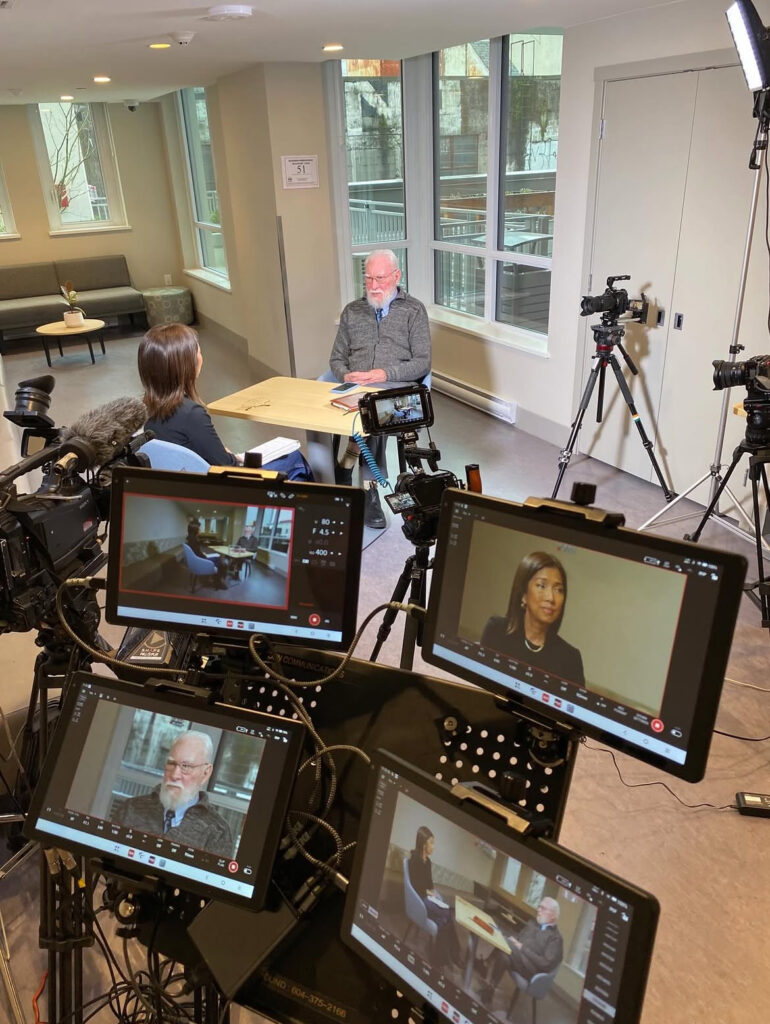
Photo from Instagram: @sophielui
Identify the risks and benefits of engaging with a public audience in a media space.
One of the biggest benefits of engaging with a public audience is the ability to build connections with people outside of your immediate workplace. Sophie Lui explained that although Twitter can sometimes be frustrating, she continues using it because it has introduced her to other professionals and the public who all offer different roles of feedback to benefit her career.
Another benefit is that social media allows professionals to share their work and engage directly with the public. For journalists, this creates transparency and allows audiences to better understand the realities of their profession and build trust with their local news anchor. Sophie discussed how social media has helped the public become more aware of the challenges journalists face, such as harassment while reporting live or sexist comments sent in by public “critics” that male counterparts typically do not receive.
However, being active in a public media space also carries significant risks. Sophie shared that she has experienced hateful phone calls, letters, and negative comments throughout her career. Although criticism existed before social media, platforms like Twitter have made it much easier for people to post hurtful comments instantly. Social media can sometimes encourage people to continue inappropriate behaviour because they know their comments receive attention.
Personally, I think the benefits outweigh the risks as long as professionals are intentional about how they engage online and are safely storing their private or personal information.
Consider what the risks for a public figure or person in a position of trust (educator, lawyer, government official) may be.
People in positions of trust have a responsibility to communicate honestly and ethically because the public often associates their personal actions with their professional role. Educators, lawyers, journalists, and government officials are expected to model respectful behaviour and make informed decisions. Because of this, even personal social media posts can affect how others perceive their professionalism.
Similarly to Sophie Lui, as a teacher candidate, I separate my life as a future local “public figure” or role model and keep public online behaviour as professional and responsible as possible. Private personal accounts are where I can share my day-to-day activities or the relaxed side to me. Students, parents, and colleagues may eventually see what I post online, so I want my social media to reflect respect, and honesty. I also want to remember that what I share has the potential to influence others, making it even more important to think carefully before posting.
In Digital Literacy Skills, it was also explained that media literacy includes understanding the ethical and legal issues surrounding media use and recognizing how media messages influence beliefs and behaviours. Likewise, ICT (Information and Communication Technology) literacy requires individuals to use technology appropriately and ethically (Trilling & Fadel 2009).
How to best address negative replies and critiques reflective of your personal values and employer social media policy?
If I receive criticism as a future educator, I hope to respond in a way that reflects my own values while also following my employer’s social media policy. If the criticism is respectful and constructive, I think it is important to listen and learn from it. However, if comments are abusive or intend only to provoke conflict, I believe it is better not to engage at all or even block/mute accounts. Removing negativity in your own personal social media space is understandable and also sets boundaries on the environment you wish to create online.
Open dialogues about media literacy and factual information can create conflict; why does this happen?
Discussions about media literacy can become controversial because people interpret information through their own personal beliefs, experiences, and values. Social media also encourages quick reactions rather than respectful, understanding conversations, making disagreements more likely.
Trilling & Fadel (2009), explain that media literacy requires understanding how and why media messages are created, recognizing that different audiences interpret messages differently, and considering how media can influence beliefs and behaviours. This means that even when two people are looking at the same information, they may draw different conclusions based on their own perspectives and lived experiences.
Sophie Lui also acknowledged that social media can be emotionally exhausting because of the negativity and arguments that often appear online. She explained that over time she has reduced how much she posts because she sometimes does not want to deal with the reaction that follows.
I think this is why media literacy is so important. Instead of reacting emotionally, people should learn to ask questions, evaluate evidence, and listen respectfully to others. Although disagreements are inevitable, they become much more productive when they are based on facts rather than misinformation. Additionally, empathy is vital to express in sensitive online discourse, and needs to be exercised more often, but may be difficult to do so because of the physical disconnect within online conflicts.
What is the benefit of having a PLN that values media literacy?
Instead of spreading rumours or misinformation, members support one another by sharing credible resources and encouraging evidence to be used to support discussions. The Digital Literacy Skills chapter explains that information literacy involves accessing information efficiently, evaluating it critically, using it accurately, and understanding the ethical responsibilities associated with sharing information (Trilling & Fadel 2009). These skills strengthen a PLN because they encourage members to rely on trustworthy information instead of opinions without evidence.
Why should you aim for varied views but factual consensus in your PLN?
One of the greatest strengths of a PLN is the opportunity to learn from people with different experiences and perspectives. Following individuals with different backgrounds can expand our understanding and prevent us from becoming trapped in a place where we only hear opinions that already agree with our own.
However, while opinions can differ, facts should still be supported by reliable evidence. Chapter 4 of Digital Literacy Skills emphasizes that information should be evaluated critically and verified using multiple reliable sources before it is accepted or shared (Trilling & Fadel 2009). This reinforces the idea that respectful debate should be based on factual information rather than misinformation.
This was probably my biggest takeaway from this week’s materials. As a future educator, I want my PLN to expose me to different perspectives because that is how learning happens. At the same time, I want those discussions to have a strong foundation in evidence and media literacy. Having different viewpoints helps us grow, but factual consensus helps ensure that our decisions and conversations are informed, respectful, and trustworthy.
References
Lui, S. (2020). EDCI 338 A02 – Media Literacy (Journalist interview). University of Victoria. Course video. EDCI 338 A02 – MEDIA LITERACY LUI – YouTube
Trilling, B., & Fadel, C. (2009). 21st century skills: Learning for life in our times. Jossey-Bass. Chapter 4 – Digital Literacy Skills | 21st Century Skills: Learning for Life in Our times