Week 3 – Know Before You Scroll
How PLNs and Social Media Change the Future of Education
When we think about communication in education, it is easy to reduce it to classroom conversations, emails, blogs, and sometimes social media posts. However, educators today are participating in much larger networks where ideas, resources, and professional identities are constantly being created and remade. A Personal Learning Network (PLN) allows educators to connect beyond boundaries of their own classrooms, but it also creates challenges around misinformation, professionalism, and the responsibility that comes with communicating in public spaces that are almost always traceable.
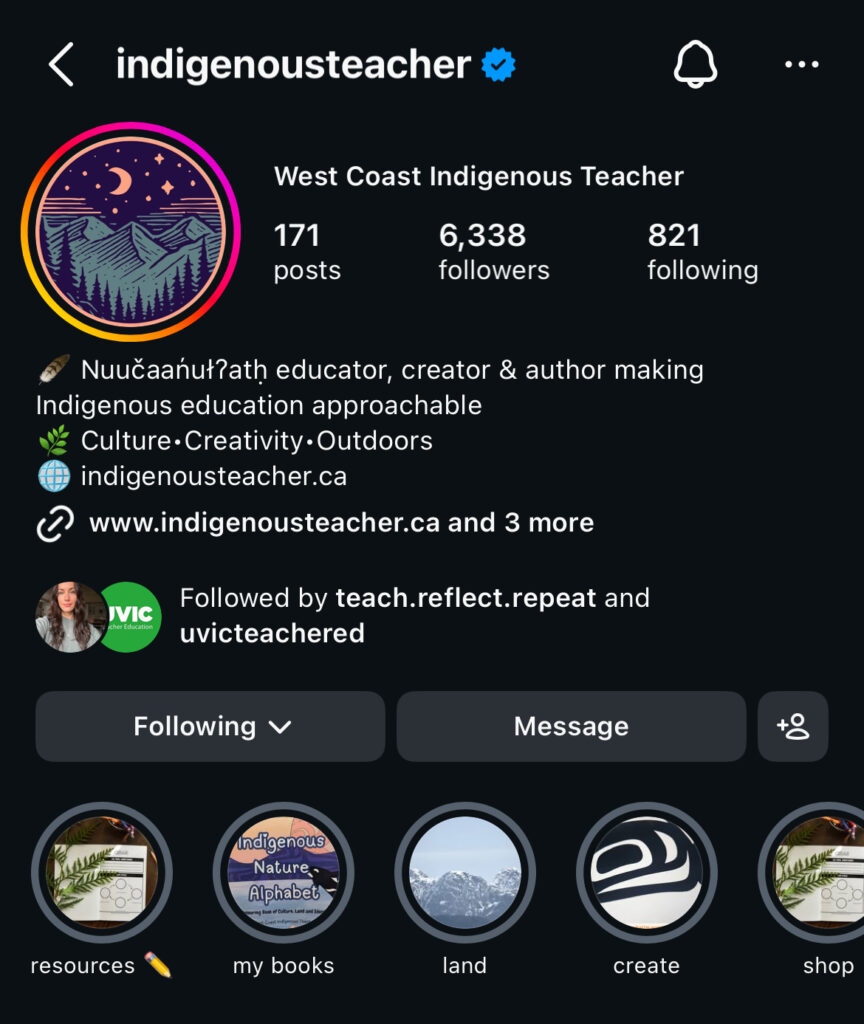
How do educators create discourse?
A PLN helps educators create discourse by allowing them to exchange ideas, collaborate, and learn from diverse perspectives. Rather than knowledge flowing only from experts and mentors to students/learners, social media can create opportunities for educators, students, researchers, and communities to contribute to ongoing conversations. In his TEDx talk, Incorporating & Accounting for Social Media in Education, Harry Dyer (2016) discusses how social media has changed the ways people communicate and construct their identities, explaining how different platforms create different environments for interaction. This connects to the idea that “the medium is the message” (McLuhan, as cited in Dyer, 2016), meaning that the platform itself influences how information is shared and understood. For example, a teacher sharing a resource on LinkedIn may present themselves differently than when they create an educational video on TikTok or share classroom ideas as a reel on Instagram. Each platform encourages different forms of communication and shapes the identity we present.
One idea that stood out to me from chapter 8 of Emerging Technologies in Distance Education was that,
“the collectively authored notes represent an amount of knowledge that is more than the sum of the knowledge that each individual had before the process” (Laouris et al., 2010, p. 158).
I really like this idea because it reminds me that genuine learning happens when everyone contributes something different. In my own teacher education program, I have learned just as much, or arguably more from conversations with classmates and mentors as I have from lectures. A PLN creates these same opportunities on a much larger scale by connecting educators from different schools, communities, and even across countries.
What is the role of social media in education?
One of the most valuable roles of social media in education is the ability to find inspiration and build professional connections. Through a social media based PLN, educators can discover teaching strategies, follow educational researchers, connect with other teachers, and access resources they may not have otherwise. Dyer (2016) emphasizes that social media can expose students and educators to new ways of expressing identity and communicating ideas through different formats, such as videos, images, filters, and other creative tools. This demonstrates that social media is not a replacement for traditional learning but it can be used as a space where learning happens in a new way.
The reading similarly explains that technology has fundamentally changed education:
“Technology improves connectivity among learners… Such technologies have created new venues for learning to take place anytime, anywhere.” (Laouris et al., 2010, p. 154)
This quote resonated with me because I have experienced this myself. Whether I am watching classroom management videos on YouTube, finding creative lesson ideas on Instagram or Pinterest, or reading discussions from other teacher candidates, social media has expanded my learning far beyond university classrooms. Social media has even created connections to my past teachers, and has built a mentor-like relationship with retired educators.
What are some problems with social media communications in education settings?
At the same time, social media can also create challenges in educational discourse. Social media communication is shaped by algorithms that determine what information users see, which can create spaces where people are exposed mainly to ideas they already agree with. Additionally, the speed of online communication can make it difficult to truly critically evaluate whether information is accurate or reliable. Dyer (2016) discusses how society has historically experienced “moral and social panics” around new technologies, from the printing press to video games and smartphones. These fears come from uncertainty about how new forms of communication will affect society. The chapter also recognizes that online collaboration is not perfect. It notes that previous research identified several weaknesses of educational wikis, including “faceless contact was not personal enough for real interactions to take place,” “lack of discussion,” and “lack of real-time communication” (Laouris et al., 2010, p. 165).
Another challenge is maintaining professionalism when educators work with vulnerable populations, such as children and youth. Social media creates opportunities for connection, but educators should fully consider boundaries, privacy, and ethical responsibilities. Dyer (2016) connects this to Erving Goffman’s idea that “all the world’s a stage,” where individuals perform different versions of themselves depending on their audience and environment. The way a professional presents themselves online may differ from their personal identity, but both identities can exist within the same digital space. We change our behaviour, communication and identity based on where we are, who we are surrounded by and what resources we have access to in that moment. This requires educators to be intentional about what they share, where they share it, how they communicate, and how their online presence reflects their public responsibilities.
Rather than viewing social media as inherently harmful, educators should understand both its benefits and limitations and use it in the way that is best for their current environment and classroom. The goal should not be to avoid technology but to develop digital literacy and critical thinking skills, while also understanding the balance between screen and non-screen learning.
Which social media platforms are beneficial in education?
Different platforms serve different educational purposes.
- TikTok encourages creativity and short-form educational content.
- YouTube provides demonstrations, tutorials, and professional development. It can also support the comprehension of difficult topics by exploring new avenues and perspectives of explaining.
- LinkedIn supports professional networking and career development, and is more specific to the professional growth of the educator.
- Instagram (my personal favourite) allows teachers to share classroom ideas, visuals, and educational resources. Some of my best classroom brain breaks have come from Instagram reels.
- Pinterest inspires education by providing lesson templates, craft ideas, and meaningful ways to encourage a creative and practical classroom environment
When working with the vulnerable sector, how does social media fit into professionalism and regulations?
Working with children requires teachers to maintain professional boundaries both online and offline. Social media can strengthen communication and professional learning, but it also requires consideration of privacy, confidentiality, and digital identity – especially from learners and students.
One quote from the chapter particularly stood out to me:
“The SDD process enables teachers and learners… to harness collective wisdom to co-produce meaning and wisdom without inhibiting or limiting individual learning.” (Laouris et al., 2010, p. 169)
I think this captures the balance educators should strive for. Social media should be used to collaborate professionally and improve teaching, but always in ways that protect students and uphold ethical responsibilities. As a future teacher, I want my public online presence to reflect professionalism while also showing that learning is collaborative, reflective, and lifelong, and I would want my personal, private social media to be separate from professional related content.
Final Thoughts
Overall, PLNs represent both an opportunity and a responsibility for educators. I have faith in the next generation of teachers including myself who grew up using social media to mentor the next generation of students to use these platforms more responsibly and professionally. Building a wall between education and social media will only remain successful for so long, and it is important to use the resources around you in an informed way. Educators should approach social media with awareness of privacy, professionalism, and digital citizenship, and consider the environment and audience they are facing.
Social media is not replacing traditional education, but, instead, it is growing the spaces where teaching, learning, and professional conversations can happen.
References:
Dyer, H. (2016). Incorporating & Accounting for Social Media in Education [Video]. TEDx Talks. YouTube. Incorporating & accounting for Social Media in Education | Harry Dyer | TEDxNorwichED
Laouris, Y., Underwood, G., Laouri, R., & Christakis, A. (2010). Structured dialogue embedded within emerging technologies. In G. Veletsianos (Ed.), Emerging technologies in distance education Chapter 8. pp. 153–170). Athabasca University Press. Emerging Technologies in Distance Education
Hi Priya!
Your blog was really easy to read! I could definitely relate to what you said about learning outside the classroom. For me it’s usually through YouTube when I’m trying to understand a CS topic, so it was interesting seeing how those same platforms can be useful for future teachers too. Great post!